The Vision
We want to preserve human history by documenting every life, because everyone has a story worth telling. Too many lives fade into obscurity, even though their experiences, memories, and impact deserve to be remembered.

Archiving every human in history to keep them and keep their legacy alive. Preserving special stories, biographies and people everyone should have been heard about.
UI/UX Design, Lead Design, Research, Testing
Figma, Affinity, Google Stitch, HTML, CSS, JS
Ongoing (8+ months)
We want to preserve human history by documenting every life, because everyone has a story worth telling. Too many lives fade into obscurity, even though their experiences, memories, and impact deserve to be remembered.
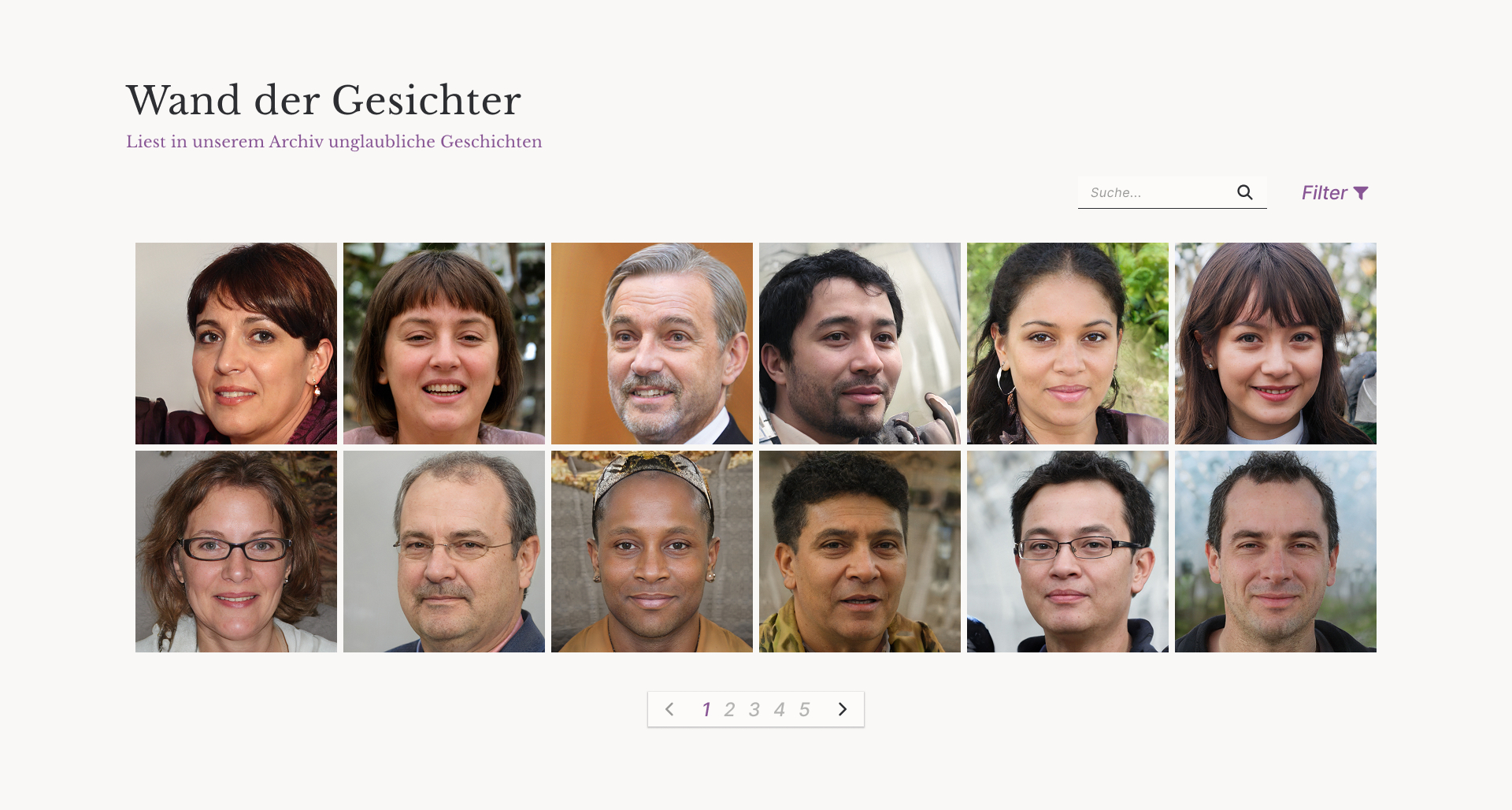
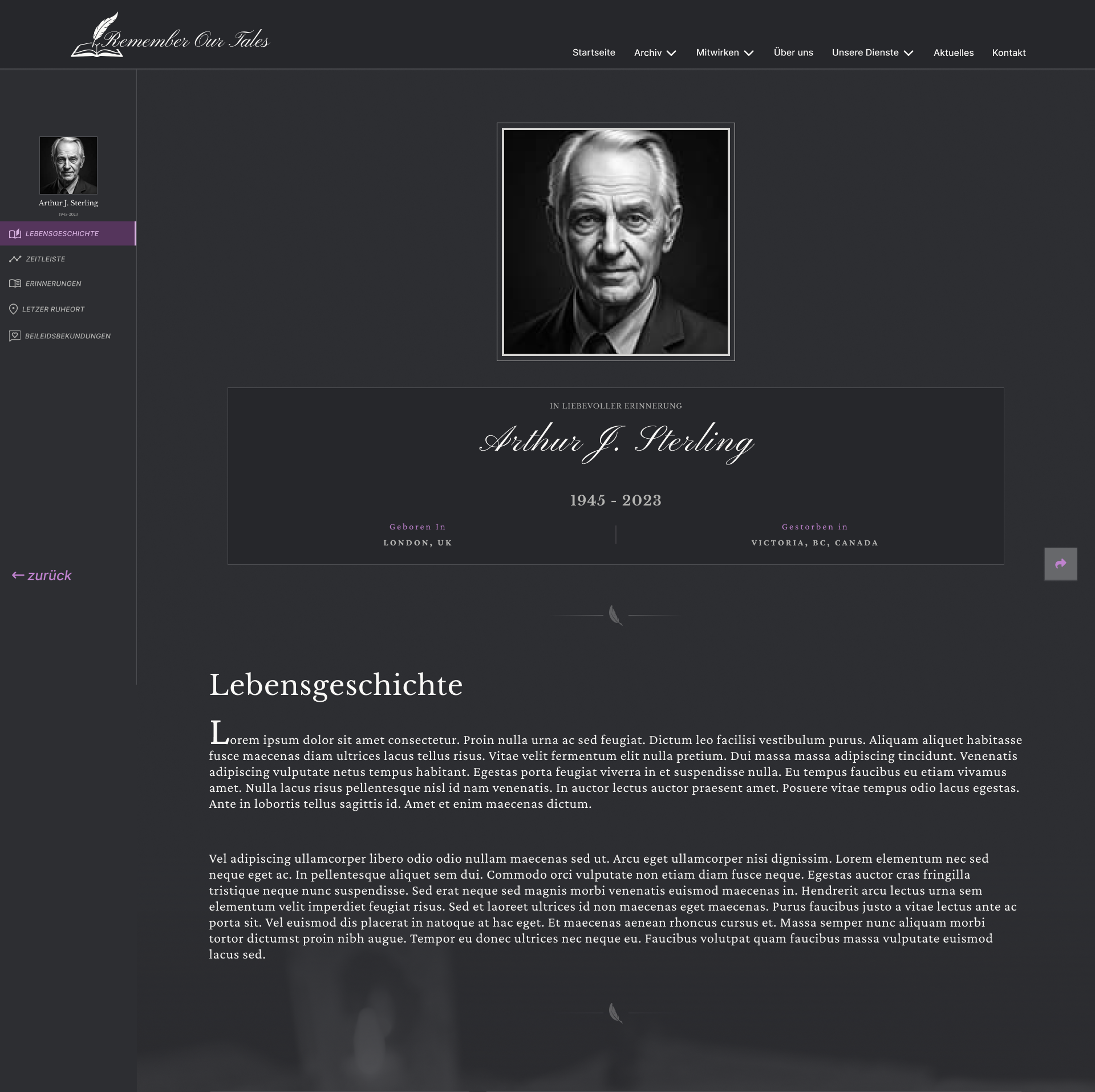
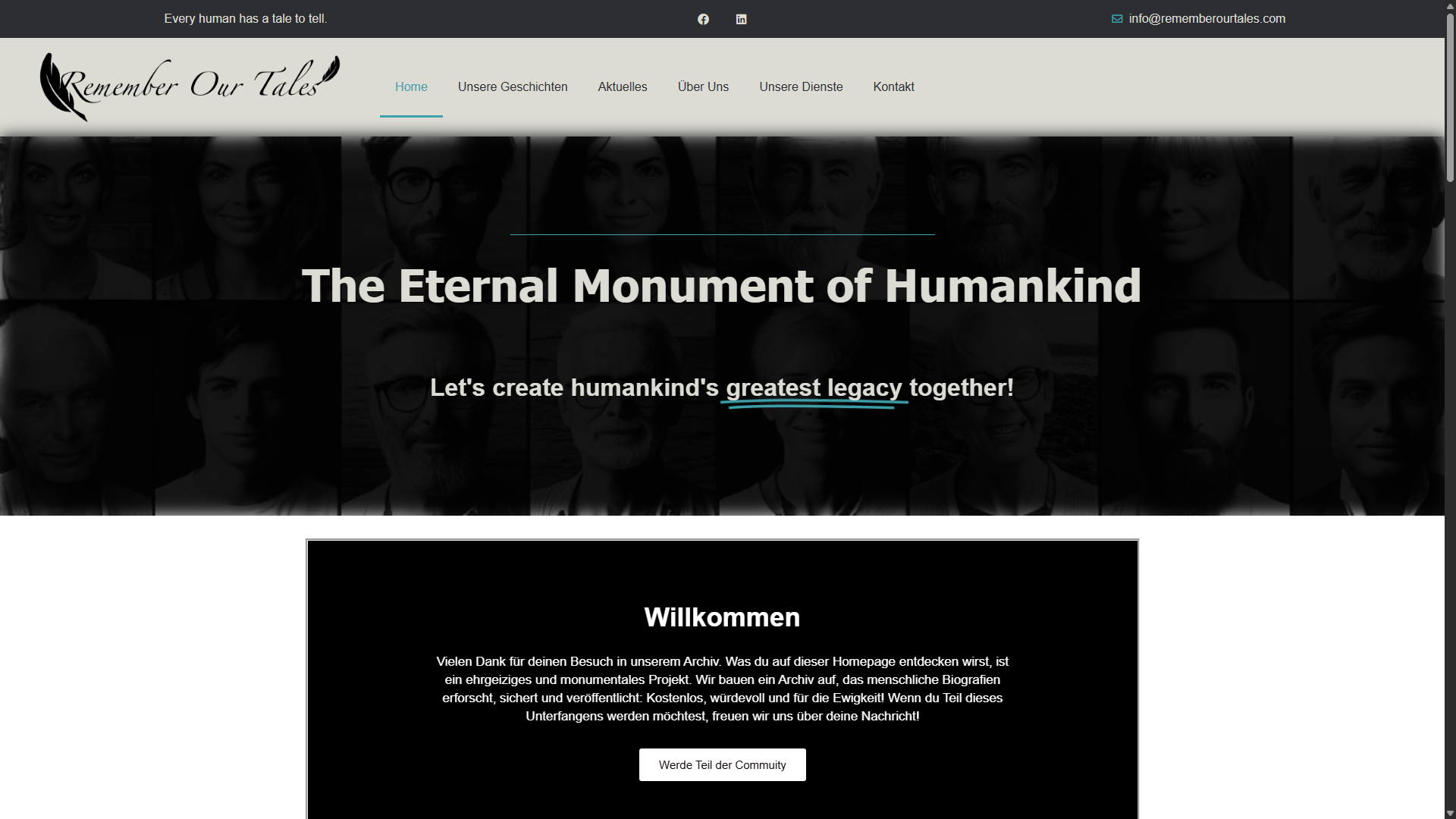
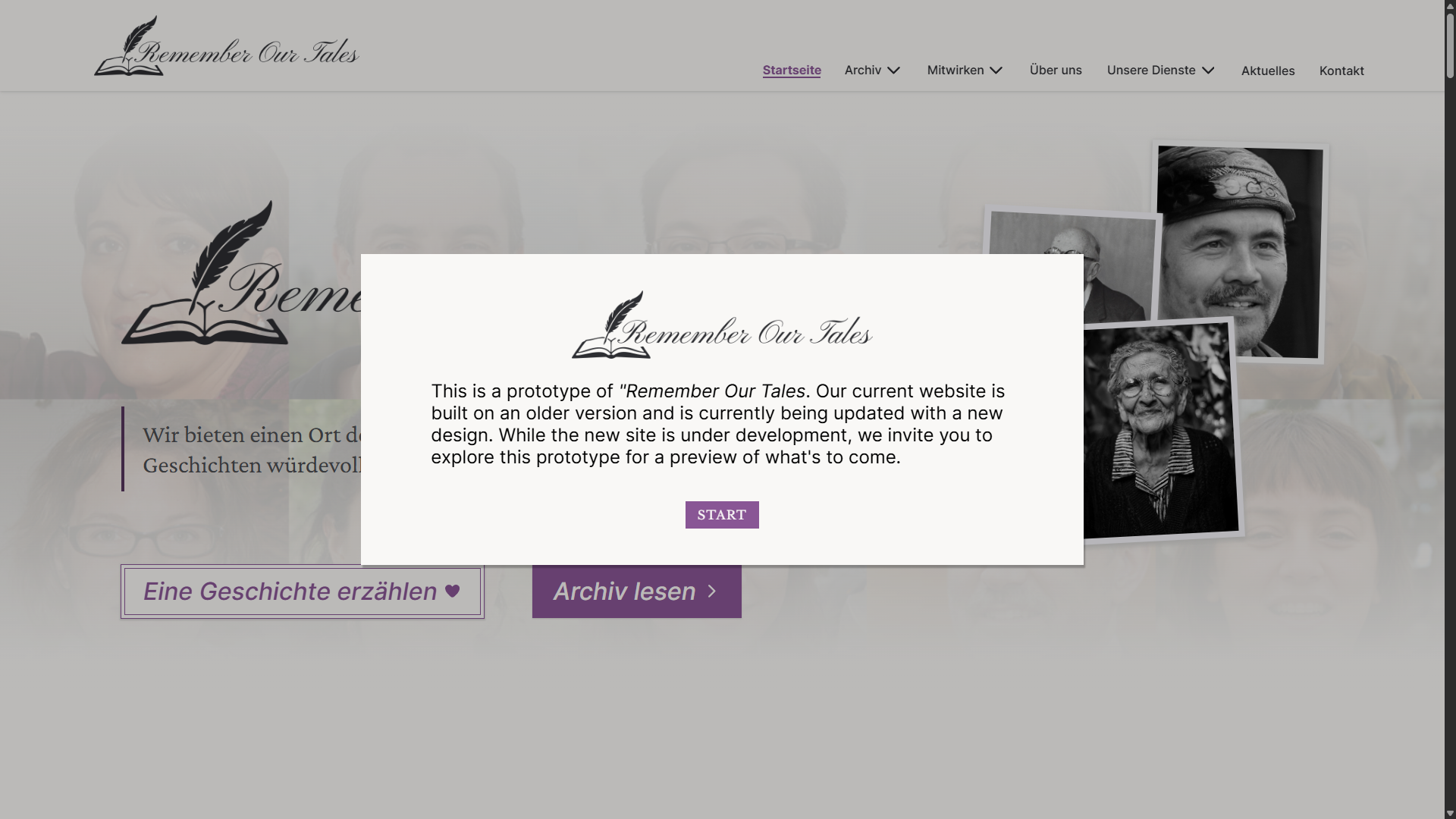
The project “Remember Our Tales” is for the moment presented in a prototype, the Wordpress site is still in an older state, with the new design not implemented.
Each obituary tells a person’s story through written memories, an interactive timeline, and a gallery of family photos - created together with their loved ones.
Anyone can help preserve the legacy of someone they loved. We handle every story, memory, and personal detail with the utmost care and respect.
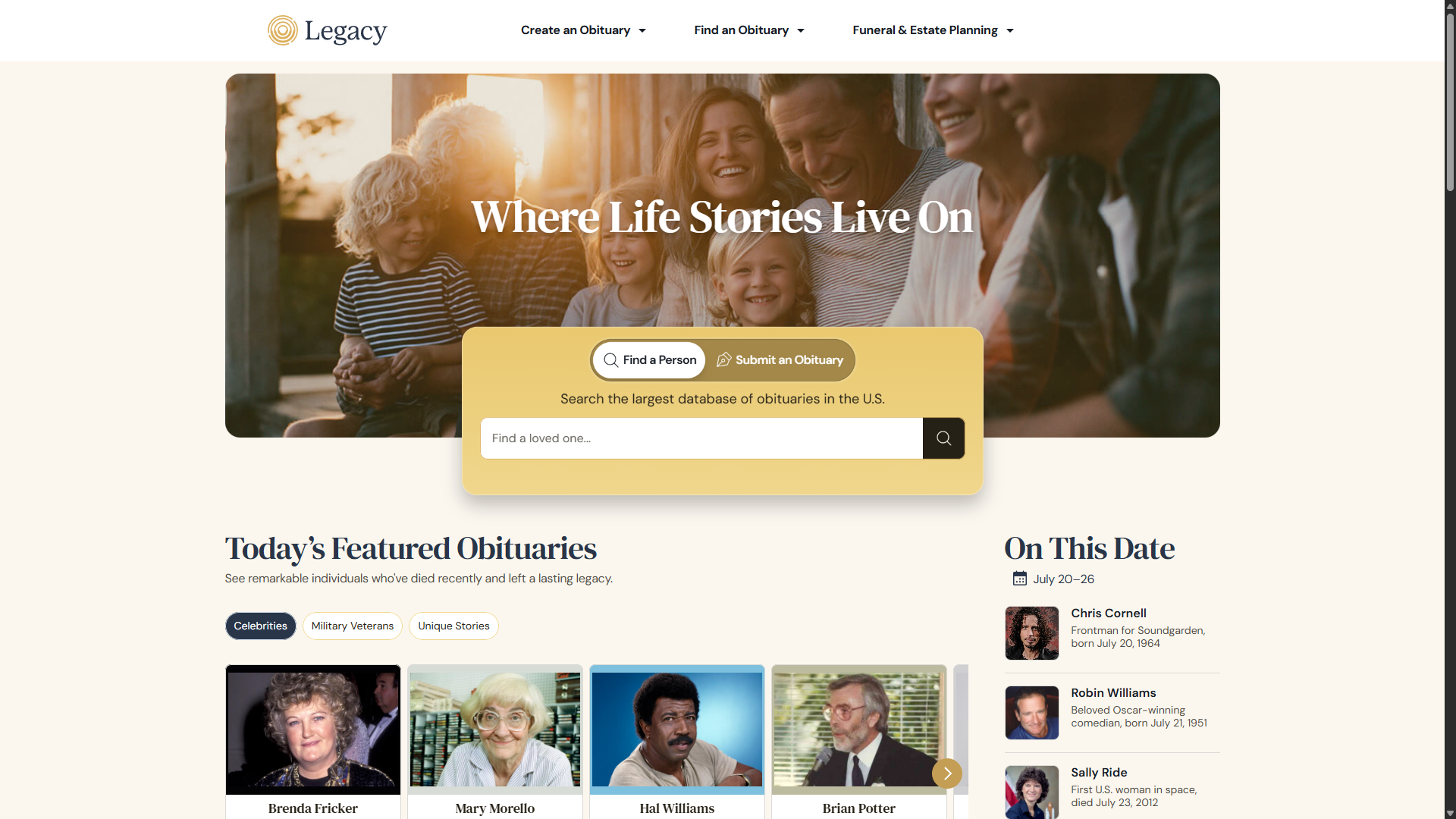
Research into obituaries and biography platforms helped identify which features could support meaningful interaction. Ideas like “On This Day” and obituary comments stood out, while others were intentionally avoided to maintain a respectful experience.
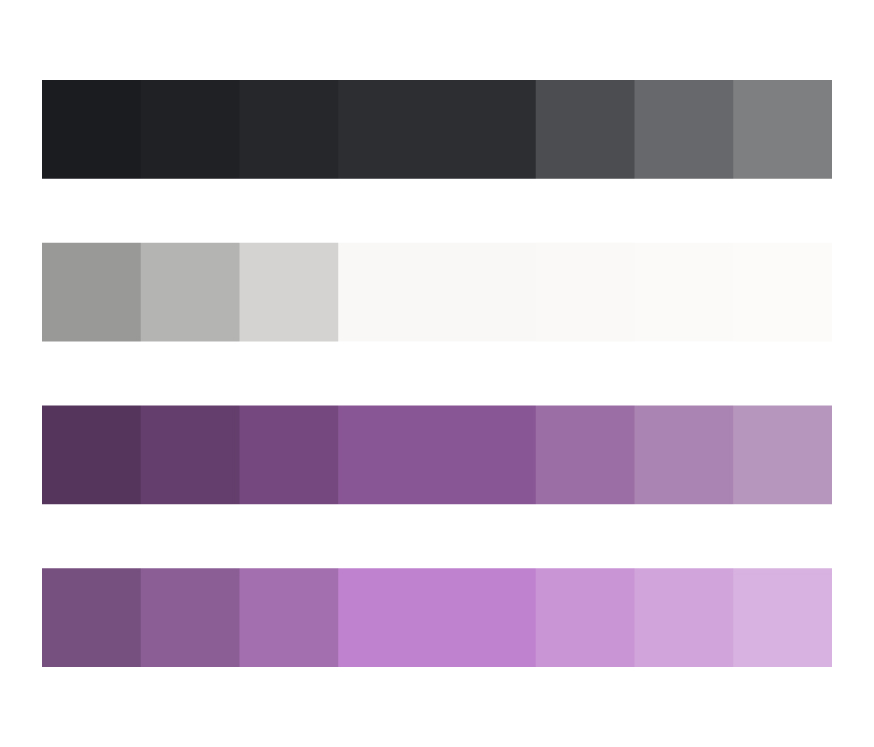
Exploring traditional obituaries helped define the project’s initial visual direction. Starting with monochrome palettes and subtle accents, I introduced lavender, inspired by its historical connection to mourning, as a defining element of the visual identity.
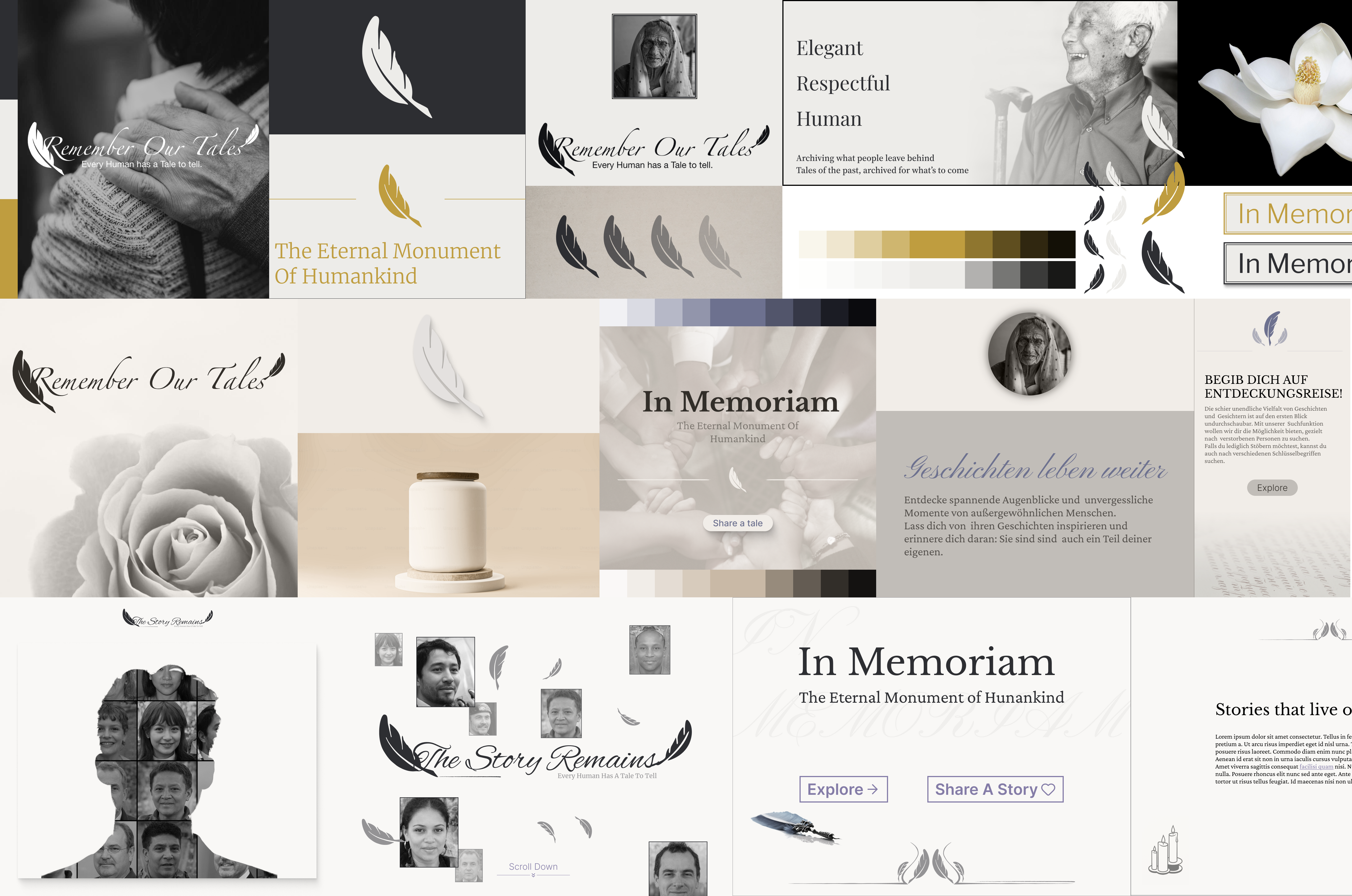
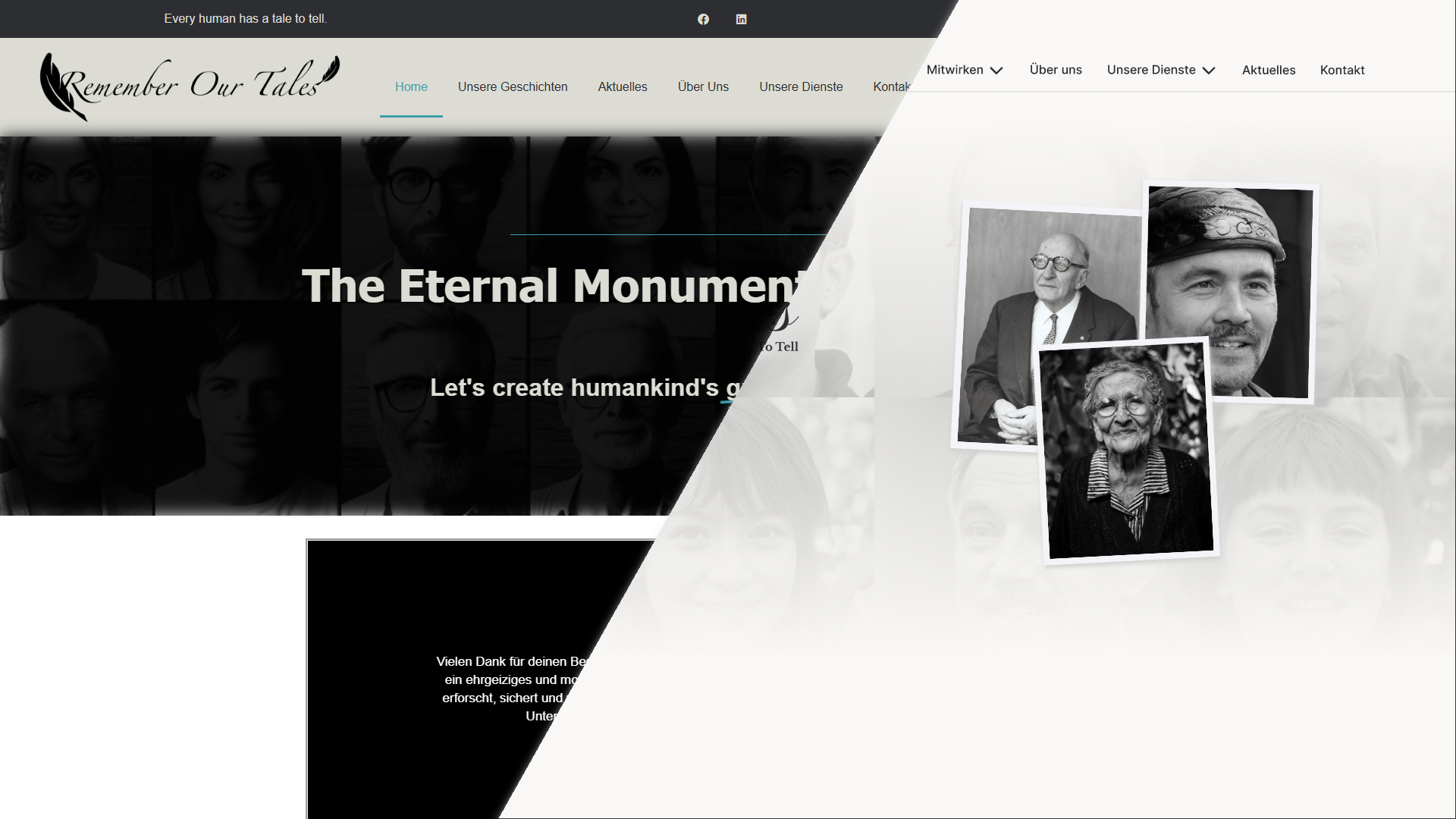
The final direction focused on three principles: human, respectful, and elegant. A monochrome palette with subtle lavender accents created the foundation, while Polaroid-style imagery and photo collages placed people at the heart of the experience. Quill & Legacy-inspired details added a refined visual touch.
When I joined the project, several pages were incomplete or empty. I first restructured existing layouts, researched missing content, and refined the overall direction. Building on this foundation, I introduced new sections, designed additional pages, and added features to strengthen the experience.
The project required constant balancing between design ambition and WordPress’s technical limitations. By moving between Figma and the CMS, I could validate ideas early and adapt designs to what was realistically achievable. Future iterations could push the experience further with animations, richer interactions, and shader-based effects.
Inspired by traditional obituaries, I evolved the initial black-and-white concept into a softer and more cohesive visual identity. After exploring several accent colors, lavender stood out for both its visual character and historical association with mourning.
The typography combines an elegant serif with a clean sans-serif, complemented by a handwritten display font for a more personal touch.
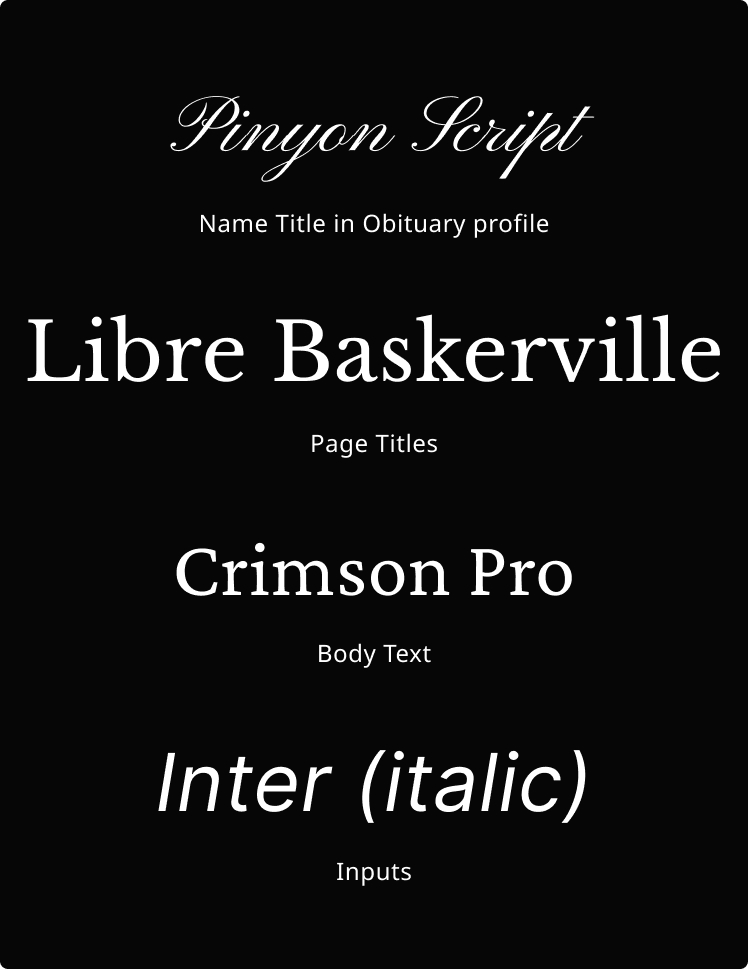
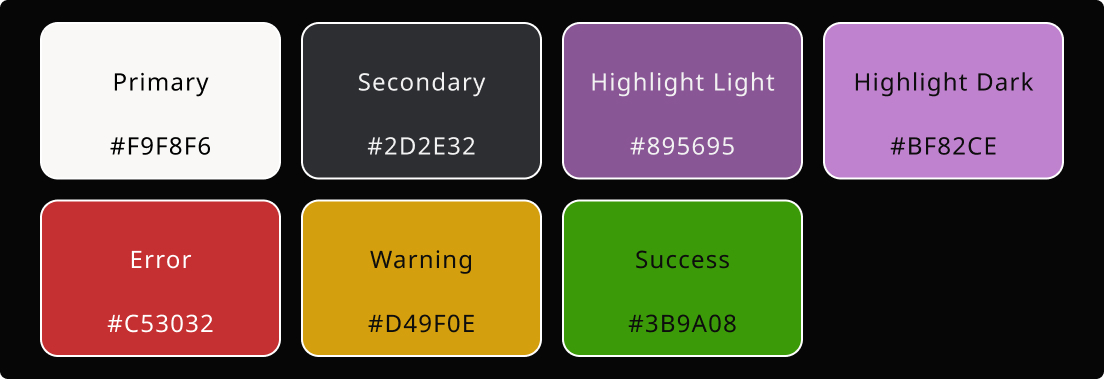
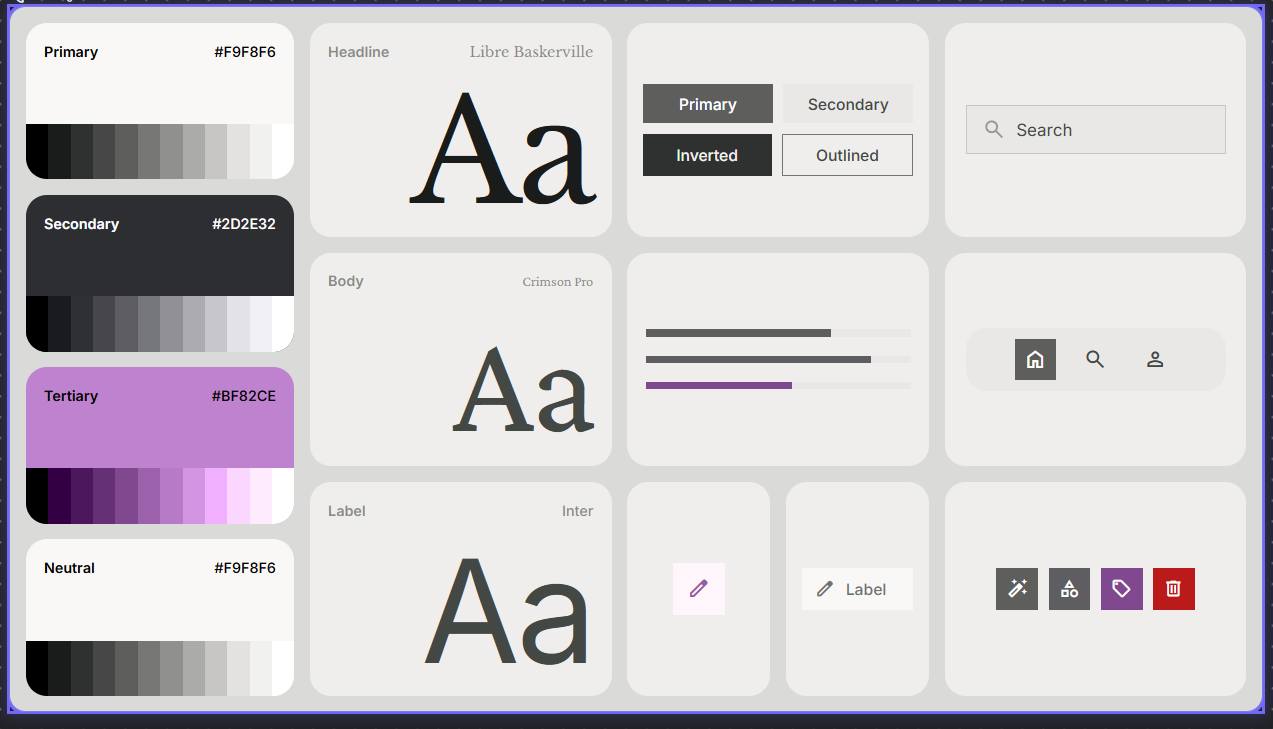
Google Stitch became a powerful tool for rapid exploration, generating multiple layout directions from the project’s style guide. This modular workflow made page creation faster and more iterative. However, AI-generated designs were only a starting point - components still needed careful refinement to achieve consistency with the established design system and visual identity.
To bridge the gap between Figma and a functional prototype, I tested several AI-assisted approaches, including Claude and Figma Make. FigmaToCode offered the most efficient workflow without an MCP, converting Figma frames into HTML and allowing me to quickly build and iterate on prototypes that closely reflected the intended final experience.
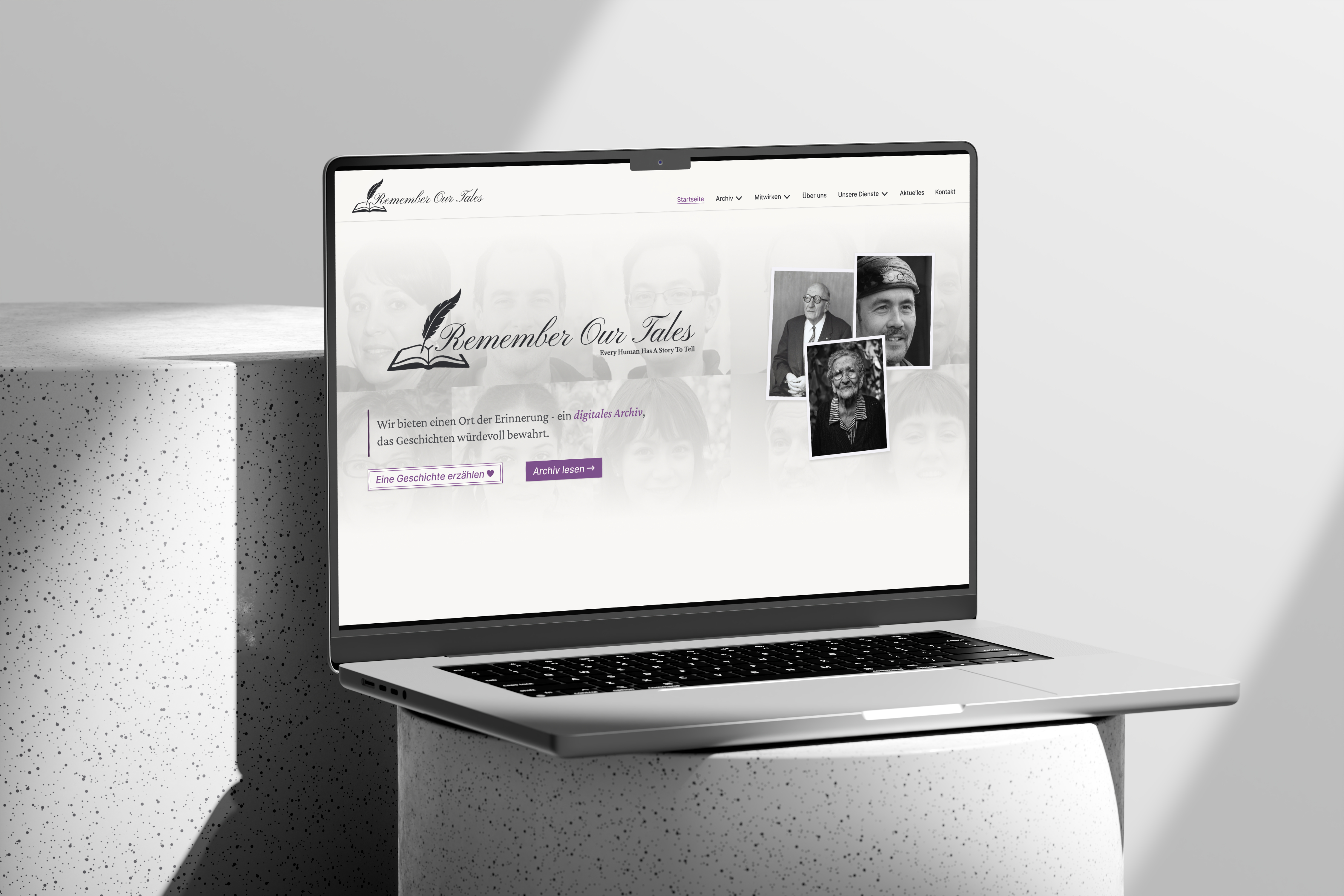
Remember Our Tales is a collaborative project developed by freelancers in their spare time. While progress is gradual, everyone involved continues to bring the vision closer to reality.
Still in an ongoing design and iteration phase, this case study showcases the current design direction and interactive prototype built on WordPress.
The project “Remember Our Tales” is for the moment presented in a prototype, the Wordpress site is still in an older state, with the new design not implemented.